


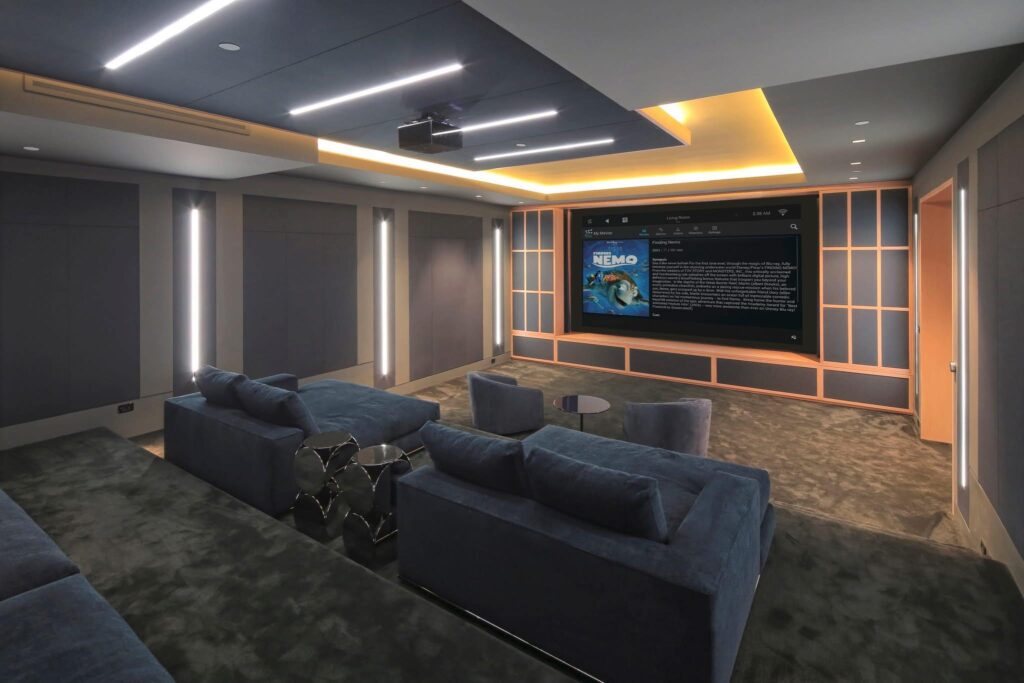
In the world of home technology, bigger is not always better.
Many companies focus on scale, installing systems across dozens of projects at once, often relying on standardized packages that can be replicated from home to home. Aura Design has deliberately chosen a different path.
Instead of operating as a high-volume installer, the Ottawa-based firm positions itself as a boutique luxury design studio, approaching each project with the same level of detail and personalization typically associated with architecture or interior design.


It’s a philosophy rooted in the belief that technology should be designed, not simply installed.


At the center of that philosophy is Aura’s founder-led approach, where design decisions are guided by deep technical knowledge and a long-term vision for how homes should function. Rather than focusing solely on equipment, Aura’s process begins by understanding how technology interacts with the architecture, acoustics, and daily rhythms of a space.
The result is a multidisciplinary design process that blends several specialized fields rarely considered together.


Acoustic engineering plays a central role in how sound moves through a home. Lighting design shapes how spaces feel throughout the day, balancing natural light with carefully controlled artificial illumination. Shading systems influence both comfort and energy efficiency, while automation programming connects these elements into a single intuitive experience.
Each component is carefully considered, ensuring that systems work together seamlessly rather than operating as separate technologies layered on top of one another.
That level of design integration also informs the brands Aura chooses to work with. The studio partners with some of the most respected names in home technology, including Lutron, Control4, Bowers & Wilkins, Paradigm, and Sonance, companies known for engineering excellence and long-term reliability.
These partnerships allow Aura to design systems that deliver both performance and refinement, whether that means discreet architectural speakers, precision lighting control, or whole-home automation platforms that simplify everyday living.


But perhaps the most defining characteristic of Aura’s approach is something less technical: restraint.
While many technology companies pursue as many projects as possible, Aura intentionally limits the number of homes it takes on each year. The goal is not to grow volume, but to preserve the level of attention required for complex, highly customized work.
This slower pace allows the team to remain closely involved throughout every phase of a project, from initial concept discussions to final system calibration.
That commitment reflects a broader belief within the company that design mistakes are far more costly than technology upgrades.


Hardware can be replaced or improved over time. But poor planning—misplaced speakers, poorly integrated lighting, or control systems that don’t align with how a home is used—can be far more difficult to correct.
By investing time in the design phase, Aura aims to prevent those problems before construction even begins.
This philosophy also distinguishes Aura from companies that rely on pre-packaged solutions. Instead of offering cookie-cutter bundles of equipment, each project is designed specifically around the architecture and lifestyle of the homeowner.
No two systems are exactly the same.
In Ottawa’s evolving luxury housing market, that level of customization is becoming increasingly important. As homes become more technologically sophisticated, homeowners are looking for systems that enhance their environments without disrupting the visual language of the space.
Technology is no longer a novelty. It is part of the home’s infrastructure.
For Aura, that shift represents an opportunity to approach technology with the same care traditionally reserved for architecture or interior design. By combining engineering expertise, thoughtful design, and close collaboration with builders and architects, the studio creates systems that support the home quietly and intelligently.


Just as importantly, Aura’s projects rarely end when the installation is complete.
Many clients maintain long-term relationships with the studio, returning years later for upgrades, expansions, or new homes. These ongoing partnerships reflect the trust built through a process that prioritizes thoughtful design over quick installations.
In an industry often defined by hardware and specifications, Aura Design focuses on something more enduring: how technology ultimately shapes the way people live in their homes.
And when it’s designed properly, the most sophisticated systems are the ones you barely notice at all.