


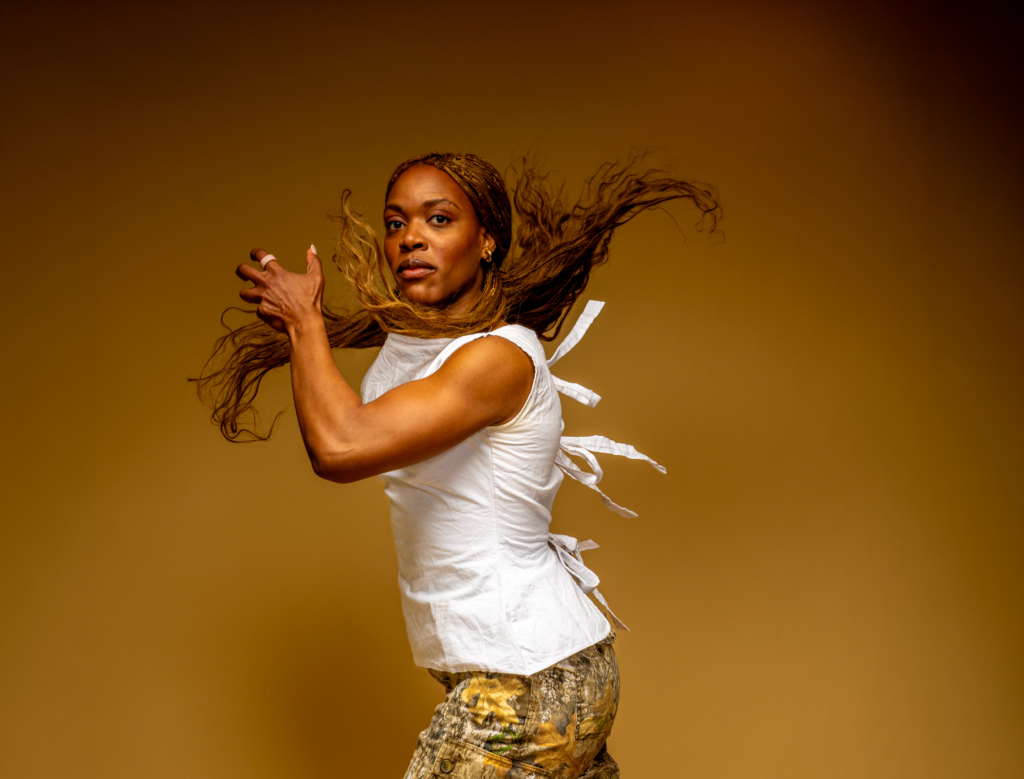
A decade ago, Jacqueline Madogo wasn’t chasing Olympic dreams. Growing up in Ottawa’s west end, sports were simply a part of everyday life. Between soccer fields, volleyball courts, family road trips, and weekends spent supporting her siblings, athletics provided structure, community, and an outlet for competition.
Today, Madogo is one of Canada’s fastest women.
The Ottawa native represented Canada at the 2024 Olympic Games in Paris and has emerged as a key contributor to Canada’s sprint relay programs. In 2025, she helped Canada capture gold in the mixed 4×100-metre relay at the World Athletics Relays and was part of the Canadian women’s relay squad that established a new national standard on the international stage. Off the track, she has become an advocate for youth participation in sport, working with initiatives such as Bell Starting Line and earning recognition through the RBC LEADHER Award.


Despite her rapid rise, Madogo remains grounded by the values she learned growing up in Ottawa: consistency, discipline, and the importance of community. We caught up with the Canadian sprinter to discuss her childhood, her Olympic debut, life beyond the track, and what’s next.
You grew up in Ottawa. What was your childhood like, and what are some of your favourite memories from those years?
I had a very balanced childhood growing up. Sports became a big part of my life early on, but it never felt forced. It started more as something fun I was always around, and over time it became something I naturally committed more and more to.
Some of my favourite memories were spending time with my family, going on vacation, and supporting my siblings during their sporting events like they would for me. We were always off to another soccer field or volleyball court. My parents definitely lived in the car driving us from one end of the city to the next, and I’m very grateful they gave my siblings and me those opportunities.


Soccer was such a big part of your early life. Looking back, are there any parallels between what the sport taught you and the athlete you’ve become in sprinting?
One of the biggest parallels is the emphasis on explosiveness and quick decision-making. In soccer, you’re constantly accelerating, reacting, and changing pace, and that translates really well to sprinting, especially in the start and drive phase.
It also taught me discipline and work ethic early on. Being part of a team means showing up consistently, pushing through tough training sessions, and holding yourself accountable not just for yourself, but for others too. I’ve carried that same mindset into track, even though it’s more of an individual sport.
When you were young, did you ever picture yourself going to the Olympics?
Honestly, that dream came a bit later for me. When I was younger, I was so focused on soccer that the Olympics didn’t really feel like something that was directly in my path. It was more of a distant idea, something you watch on TV and admire, but not necessarily something you see yourself in right away.
It wasn’t until I transitioned more seriously into athletics in my 20s that it started to feel real. Once I saw my progression, the Olympics became a concrete goal rather than just a dream… and I think that’s what made it so meaningful. It wasn’t something I’d been chasing my whole life, it was something I grew into.
You were a multi-sport athlete before sprinting became your focus. How did that transition happen?
The transition into sprinting happened pretty naturally. Track was something I was doing alongside soccer at first, almost just to stay sharp and enjoy competing in a different way.
I started noticing that my performances were improving quickly, and I was really responding to the training. The moment it started to feel serious was when I began competing at a higher level and being competitive with athletes who had been focusing on track full-time.
Once I made that decision, everything kind of accelerated. The more I invested in sprinting, the more I saw my potential, and that’s when I knew it wasn’t just a side sport anymore.
What stands out to you most when you think back on your first Olympic experience in Paris in 2024?


Just how overwhelming and special the entire environment felt.
The scale of it is something you can’t fully understand until you’re actually there. The energy, the crowd, and the best athletes in the world all in one place. Walking into the stadium and realizing you’re part of that moment is something I’ll never forget.
Overall, I left feeling really proud. It was a big milestone for me, not just in terms of performance, but in understanding what it takes to compete at that stage and knowing I belong there.


You were part of several major relay performances for Canada in 2025. What did those mean to you?
Personally, it was a really proud moment because relays are so much about trust, timing, and execution. You can have great individual athletes, but it takes everything coming together at the right time. Being able to contribute to performances that made history for Canada was really special.
As a group, I think it showed the depth and growth of Canadian women’s sprinting. There’s a strong culture being built, and being part of a relay where everyone is pushing each other and holding each other to a high standard makes you better as an athlete.
It was also a big confidence boost. Results like that show we’re moving in a really positive direction, and it’s exciting to be part of a group that is starting to expect to win on the world stage.


Off the track, you’ve worked with young newcomers through Bell Starting Line and were recognized with the RBC LEADHER Award. What did those experiences mean to you?
Being part of the Bell Starting Line initiative felt really meaningful to me because sport has always been something that brought people together in my life.
I really enjoyed being able to share my experience and hopefully show young people that no matter where you come from, there’s space for you in sport and you can find belonging through it. It reminded me that sport is bigger than competition, it can actually change people’s lives in a real way.
Receiving the RBC LEADHER Award was also a really special moment. It felt like recognition not just for what I’ve done on the track, but also for the work I’ve tried to do off it and the example I want to set. It motivated me to keep growing in both areas.
Do you get back to Ottawa often? When you do, where are some of your favourite places to eat, relax, or reconnect with home?
Yes! I try to get back whenever my training and competition schedule allows. There’s something about being home that helps me slow down and feel grounded again. My family is from the west end, so I spend as much time with them as possible when I’m back. For food, some of my favourites are Aroma Meze, Lola’s Kitchen, Mazarine, and Heartbreakers Pizza. Ottawa’s food scene keeps growing, so there’s always somewhere new to try.
More than anything, being home is about recharging, seeing familiar faces, and reconnecting with family and friends.
Lastly, what’s next for you?
Right now, the focus is staying healthy, getting stronger, and sharpening the little details that matter when you’re competing at a high level.
The Commonwealth Games in Glasgow are the big goal this season, and I would love the opportunity to represent Canada there.